
 Book Free Consultation

Explore Management Center in the Anypoint Platform
Understanding the Power of Mulesoft Anypoint Platform Management center's key components for monitoring, governance, security, and control tools
By Praveen Kumar Murugesapandian
Salesforce Developer
Understanding The Power Of Anypoint Platform
In today’s rapidly evolving digital world, businesses depend on seamless connectivity between applications, data, and systems. Traditional integration approaches, often built on poin to point connections and tightly coupled logics, tend to be complex, difficult to scale the application, and expensive to maintain as business needs to develop.
To overcome these challenges, modern integration platforms like MuleSoft’s Anypoint Platform have come up as powerful, future ready solutions. Anypoint Platform provides a unique, API-led approach that makes the integration process simple, enhances the reusability of integration applications, and enables organizations to build faster with secure and scalable applications.
In this blog, we will explore the Anypoint Management Center, and how it helps teams to design, build, manage, and monitor APIs and integrations efficiently. Lets dive in...
What is Anypoint Platform?
MuleSoft Anypoint Platform is the first iPaaS unified platform that has the full API development lifecycle. The Anypoint Platform enables developers to design, create, and manage ongoing integration via APIs with low code configuration.
In the previous blog, we covered about the key components of Anypoint Platform and lets starts with Anypoint Management Center here...
Anypoint Management Center Overview
Anypoint Management Center is a web based control center with a centralized view for managing and monitoring APIs. Moreover, it is the administrative backbone of Anypoint Platform. With Management Center, users can configure, deploy, monitor, control access, and apply security to their APIs and integrations, which we will explore in more detail below. It provides centralized control over the entire API's in the Anypoint Platform, which allows teams to monitor, govern, secure, and troubleshoot applications efficiently.
Below are its major components, will see one by one.
Runtime Manager
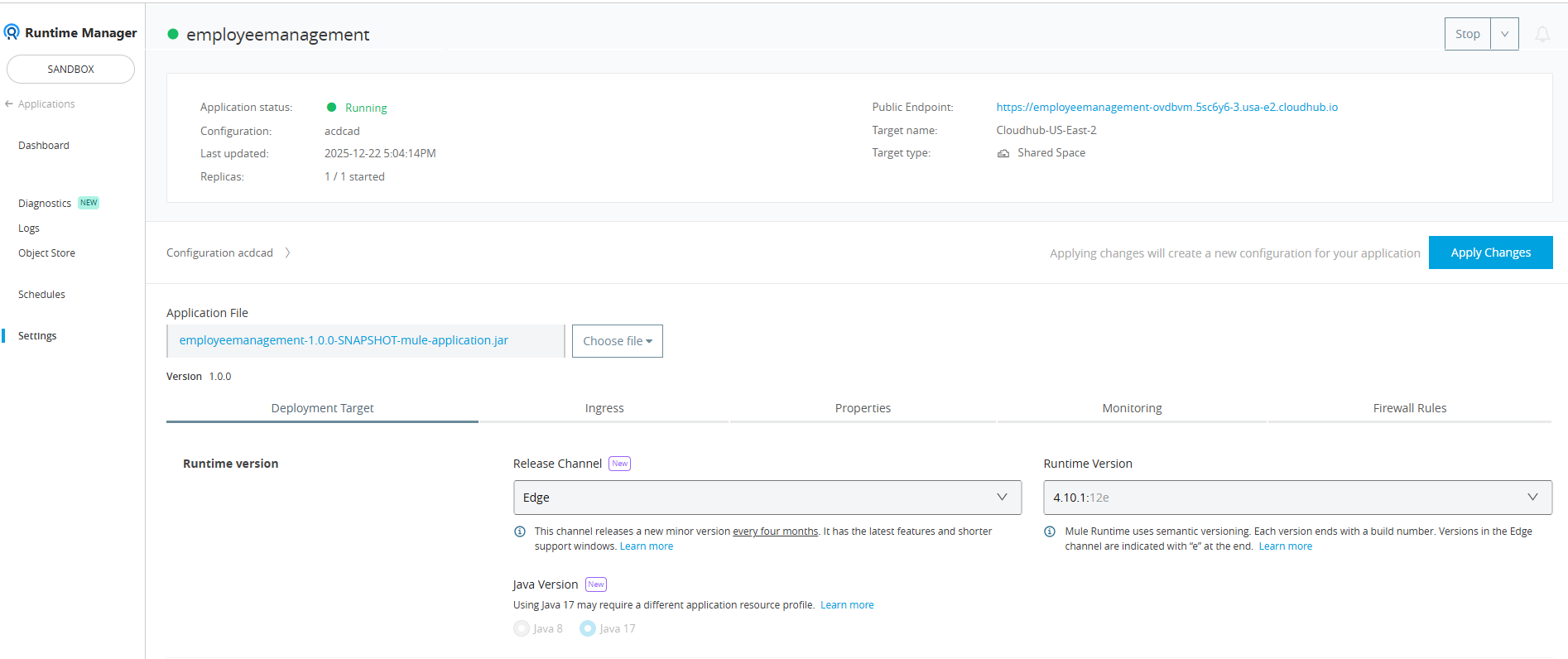
Anypoint Runtime Manager provides a centralized, single view for managing applications and APIs across the applications. It enables teams to easily deploy, manage, and monitor applications and APIs, whether they are hosted on CloudHub, MuleSoft’s platform as a service offering, or on premises servers. With Runtime Manager, operational tasks such as application deployment, scaling, configuration, and monitoring are streamlined, making it easier to maintain reliable and high performing integrations.
- Manages and configures different runtime environments.
- Allows scaling of workers depending on the application size and helps troubleshoot runtime issues.
- Monitors applications logs and performance metrics.
- Ensures smooth and reliable operation of APIs and integrations.
API Manager
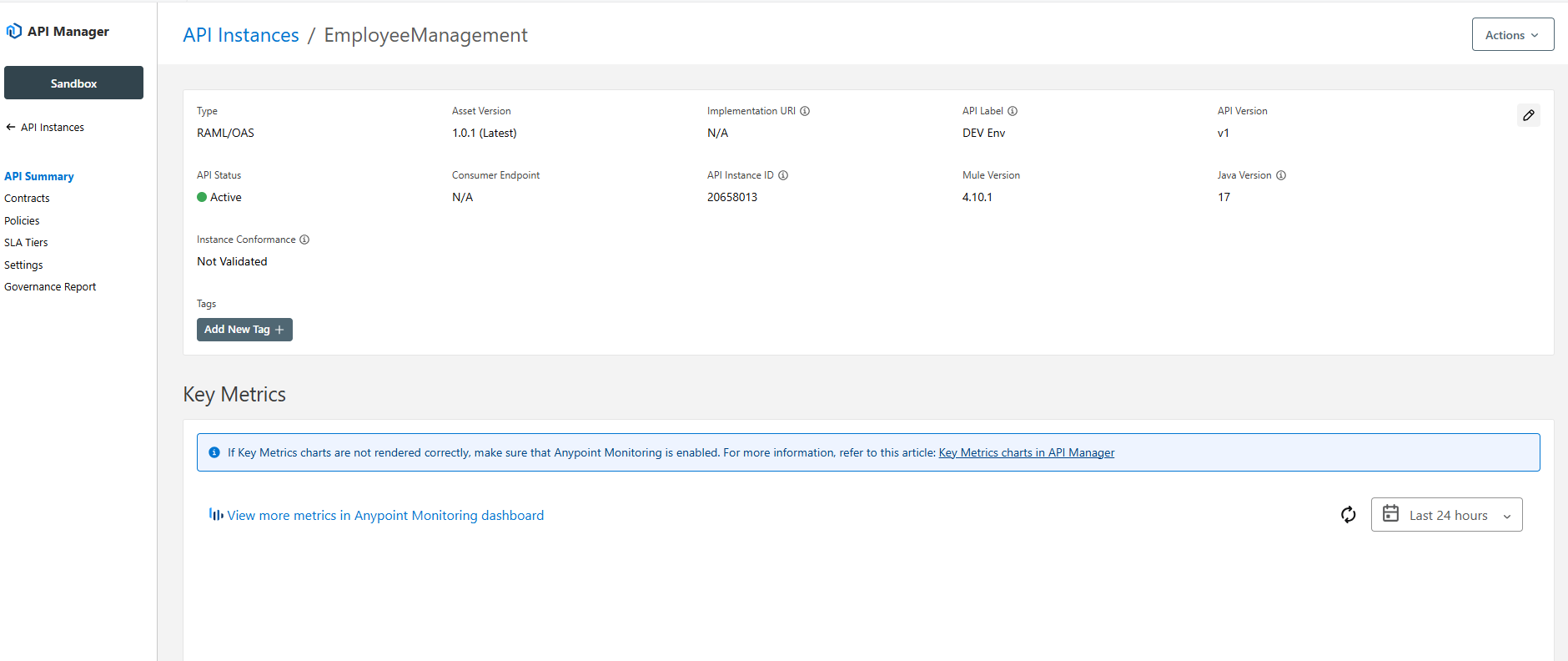
Anypoint API Manager helps teams manage APIs securely throughout their entire lifecycle. It allows users to protect APIs, control who can access them, and apply usage limits and security policies.
- API Manager is essential for managing and governing APIs in production environments
- We can implement security policies such as OAuth, rate limiting, and IP filtering to protect APIs.
- Manages API versions and different lifecycle stages like development, testing, and production.
- Monitors API traffic and usage through built in analytics.
- Controls access available for both public and private APIs.
API Governance
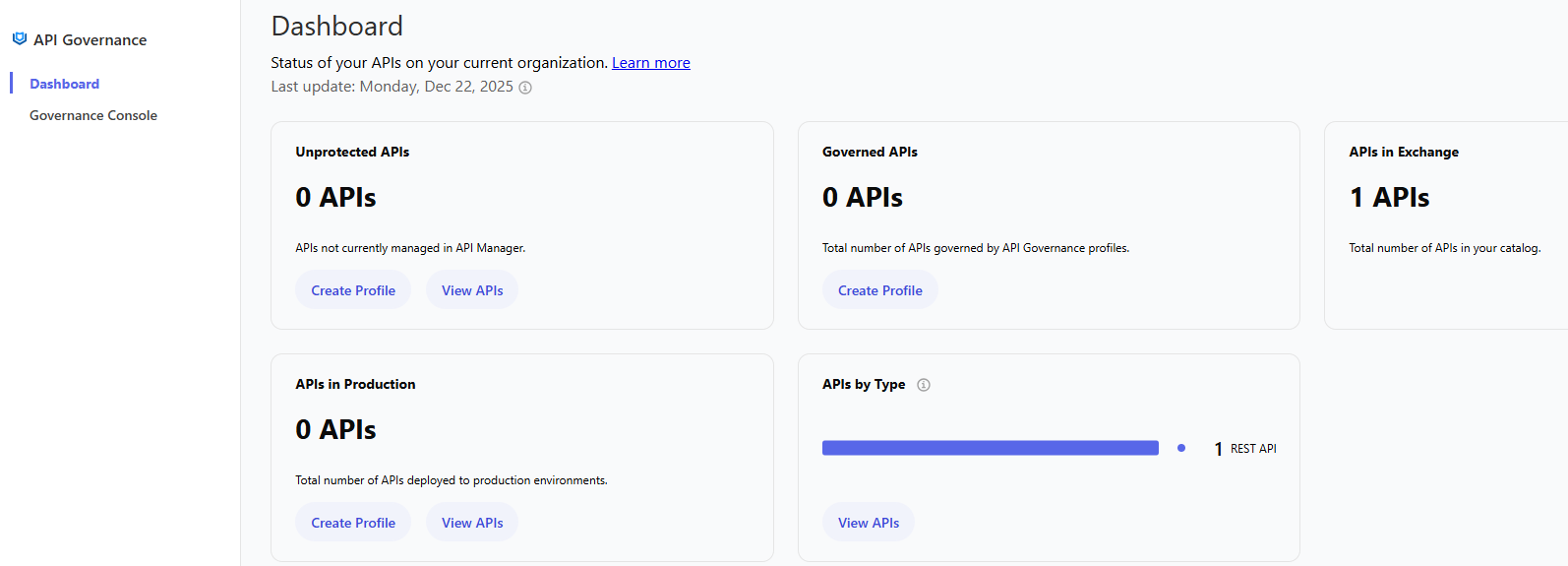
API Governance ensures your API's quality and security. Mulesoft Agent governance will ensure the enterprise grade control and compliance. By the API governance, it works like a quality control system that ensures every API is built consistently, securely, and correctly from development to production.
- It allows teams to define standards for API quality and security and then automatically checks APIs against those standards.
- Enforces rules related to API naming, design, and security best practices.
- Ensures APIs align with enterprise architecture guidelines.
- Helps teams build consistent, high quality, and future ready APIs.
- Through the API Governance Dashboard, we can view metrics, such as the number of unprotected APIs, governed APIs, APIs in Exchange, and APIs in production.
API Visualizer
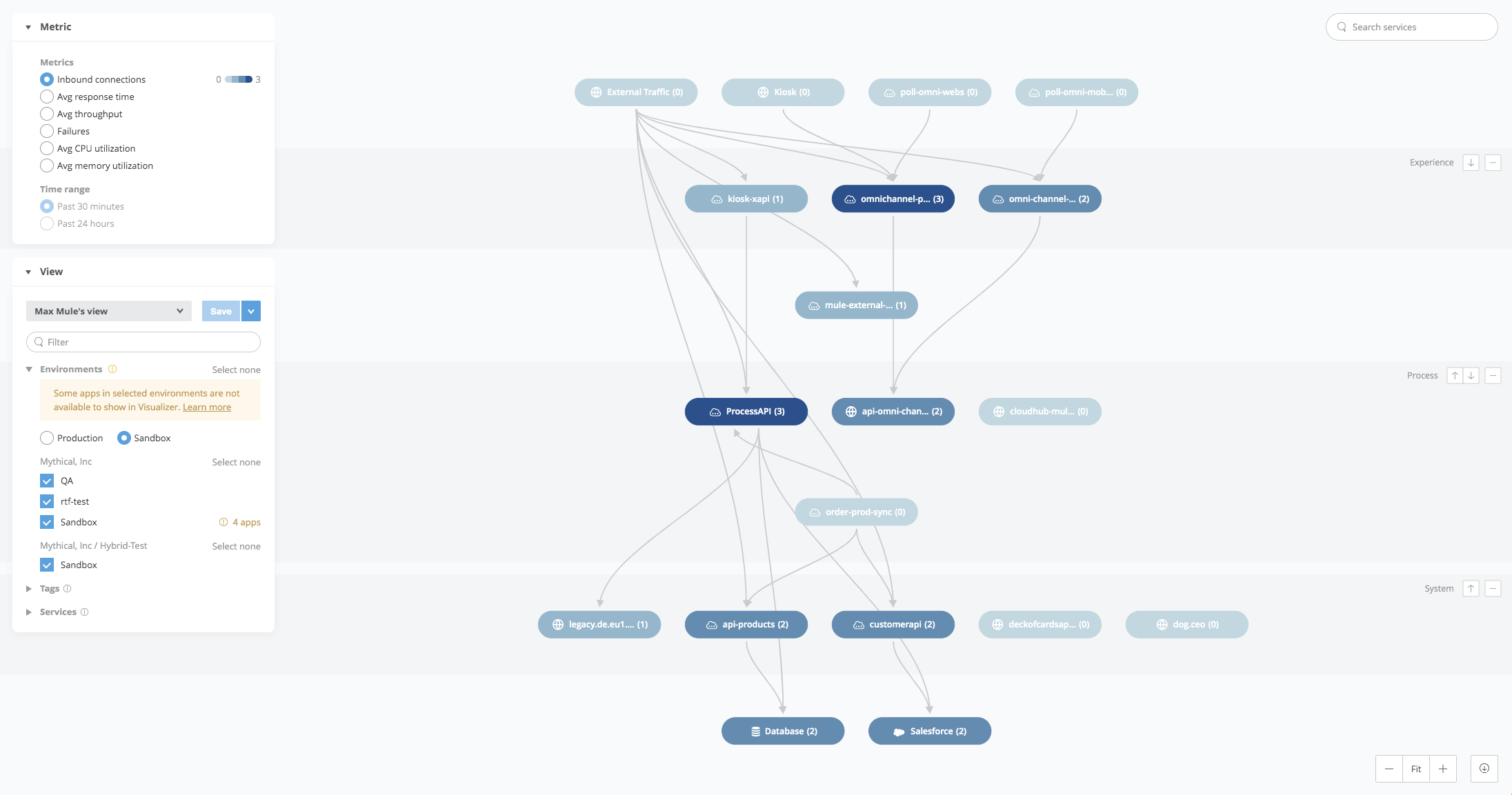
API Visualizer shows a visual map of your application and API network. It helps you see how different APIs, Mule applications, and connected systems work together. You can use this visual view to explore your architecture, troubleshoot issues, and check whether APIs follow security and policy rules.
- Provides a visual map that shows how APIs are interconnected and depend on each other across the applications.
- Helps teams clearly understand API interactions and the flow of data between services.
- Speeds up solving the issues by making it easier to identify impacted APIs and dependencies.
- Highly useful for architects and operations teams to analyze and manage the overall API landscape.
- The information is updated automatically, with no setup required.
- Access is fully secured. Only users with the right permissions can view the application network.
Source: Mulesoft
Monitoring
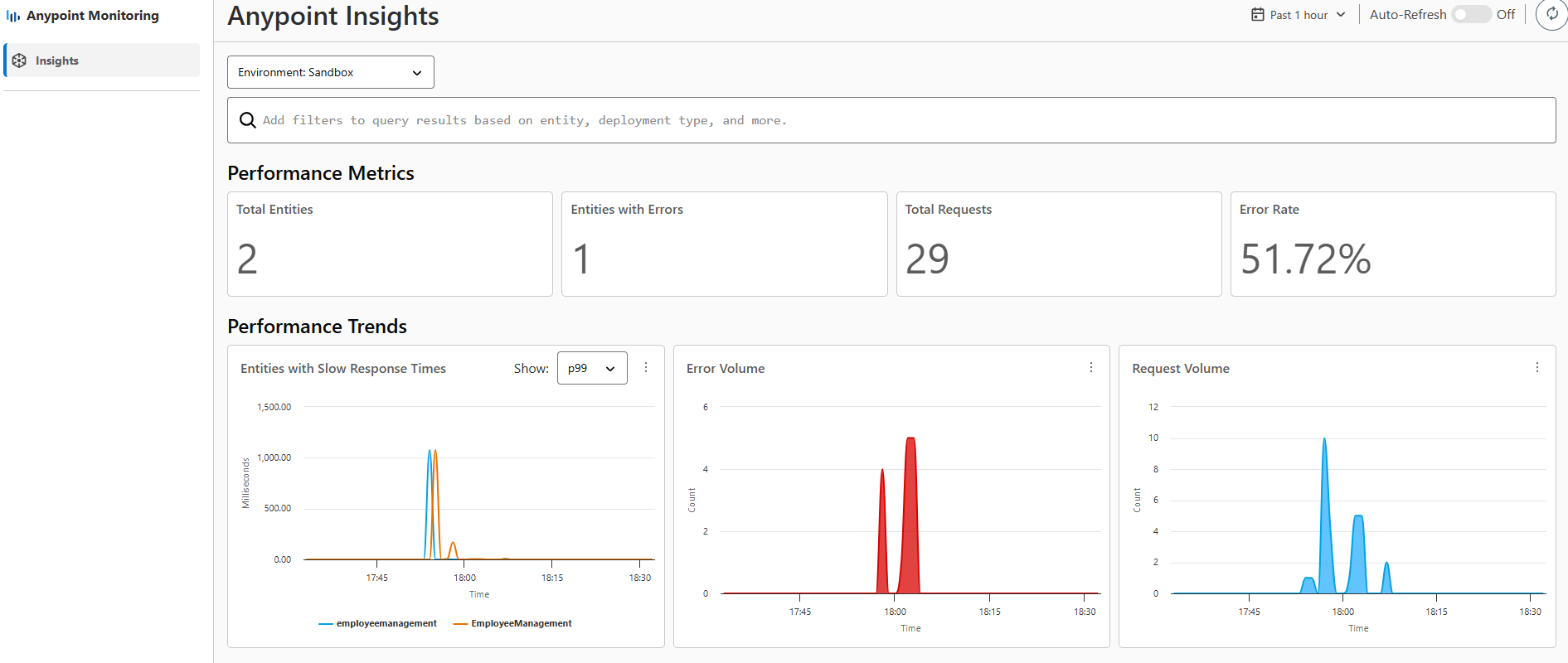
Anypoint Monitoring provides gives real time visibility into integrations across your all the APIs. These tools are designed to reduce the time to identify and resolve the issues quickly.
- Monitoring is essential for maintaining reliable systems and enabling active issue resolution.
- Provides real time dashboards to monitor system health and API performance.
- With the centralized log management, it is easy to track and analyze issues.
- Automatically send alerts and detect anomalies to identify problems early.
- It provides detailed analytics on API usage and performance.
Access Management
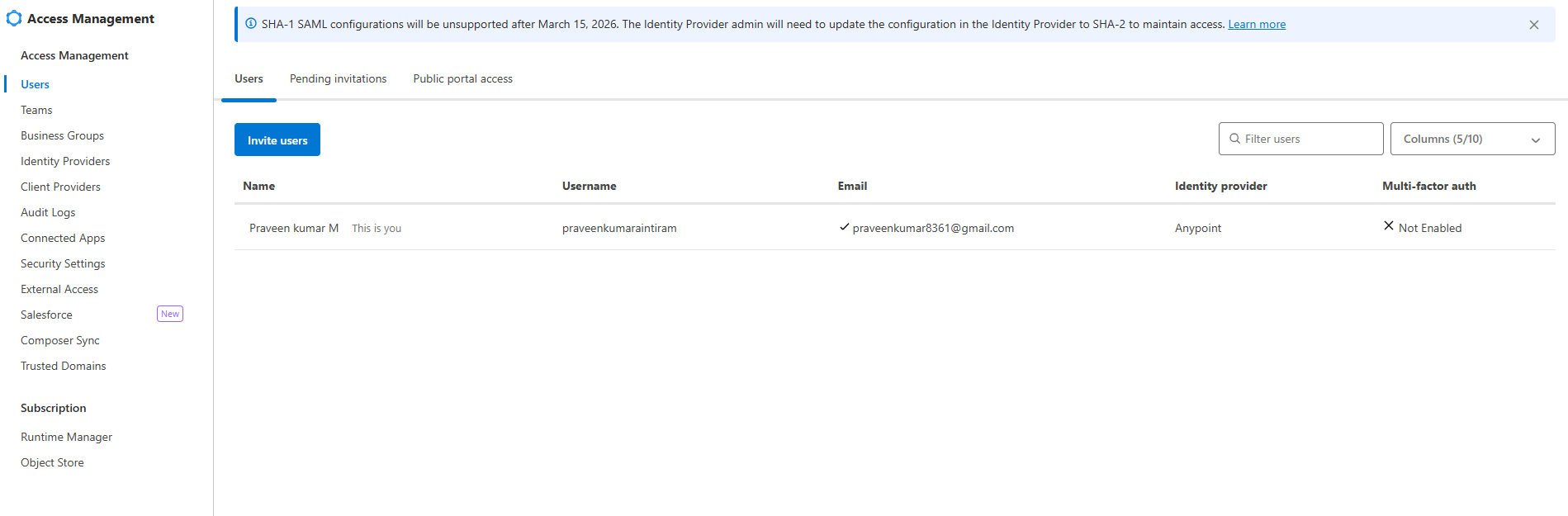
Access Management handles platform level user control. Also provides REST API for you to programmatically access the resources related to the use and client management, organisations and business groups.
- We can able to manage role based access control to ensure users have only the permissions they need.
- It supports multi factor authentication to add an extra layer of security.
- Allows management of organizations and business groups within the platform.
- Fine level of secure and controlled collaboration across different teams can be managed.
Secrets Manager
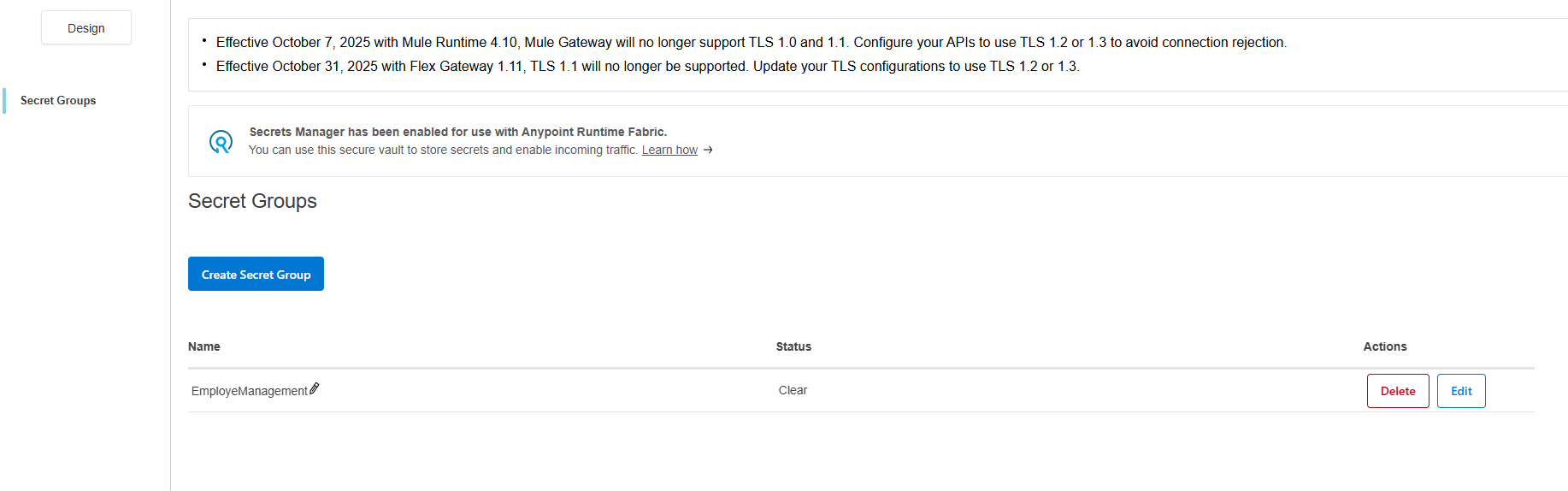
Anypoint Security Secrets Manager securely stores and provides controls to access keys, certificates, passwords, and other secrets, which leads to least privilege access to the particular users. Also prevents the hard coding of the sensitive data across the Anypoint Platform
- Provides centralized storage for managing sensitive information securely.
- Safely manages passwords, API keys, certificates, and client secrets.
- Improves security by eliminating the need to hardcode credentials in applications, which are critical for building safe, secure applications.
Conclusion
In this blog, we have explored the power of Management Center in Anypoint Platform. From designing the API and deployment with low code to governance, security, and monitoring the APIs, Anypoint Platform provides everything organizations need to build quick, scalable, and future ready integration solutions.
In upcoming blogs, we will dive deeper into how MuleSoft works, explore real world integration scenarios, and understand how organizations use Anypoint Platform to solve complex business challenges. So, stay tune for our upcmoing blogs...
