
 Book Free Consultation

Aintiram Web Tech Becomes a Claude Partner
Aintiram Web Tech is now a Claude Partner. Learn how we help Salesforce teams and growing businesses apply Claude AI in practical, well-governed ways.
By Saranya Vengatraj
Marketing Coordinator
Aintiram Web Tech Becomes a Claude Partner
Almost every business we talk to is already curious about AI. The harder question is where it actually helps, and how it fits into the systems their teams rely on every day.
That’s the question we’ve been working on, and we’re pleased to share that Aintiram Web Tech has joined Anthropic’s Claude Partner program as a Claude Partner. The program is built for organizations that help businesses adopt Claude responsibly and effectively.
What this means for you and for us
Claude is a family of AI models from Anthropic, used for writing, coding, analysis, and working through complex information. As a Claude Partner, we get access to partner enablement and technical resources that help us understand the technology in depth and apply it with care.
This builds on work we already do. Aintiram provides Salesforce consulting and technology solutions, so we spend our days inside the systems where businesses manage customers, processes, and reporting. Claude gives us a new way to make those systems more useful, and our experience with those systems helps us understand where AI belongs and where it doesn’t.
For clients, that means a team that can look at AI from both sides: what the technology can do, and what your business and your systems actually need.
Where we think Claude can help
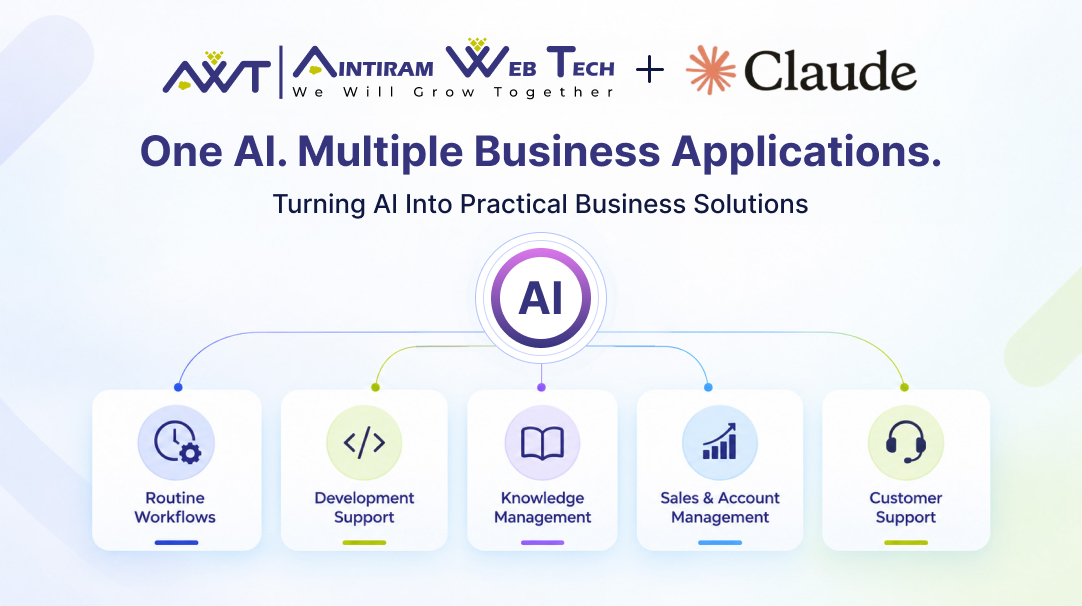
AI is most useful when it’s pointed at a specific, well-understood problem. Here are a few areas we’re focused on.
Customer support. Imagine a Salesforce support team that spends hours each week reading long case histories before replying. An AI model could summarize each case and draft a first response, with an agent reviewing it before anything is sent. The team saves time, and a person still makes the final call.
Sales and account management. Account teams often hold years of notes, emails, and call logs. Claude could help condense that history into a short briefing before a client meeting, so the person walking in is prepared without spending an hour digging.
Knowledge management. Policies, process documents, and internal guides pile up quickly. AI can help summarize them, answer routine questions from them, and point people to the right source faster.
Development support. Claude can assist our engineers with coding, code review, and technical analysis. It speeds up routine work and gives us more time for the design decisions that need human judgment.
Routine workflows. Some repetitive tasks, like sorting incoming requests, extracting details from documents, or preparing standard reports, are good candidates when the process and safeguards are clearly defined.
Not every one of these will suit every business. We’d rather test an idea against your real data and workflows than promise results up front.
Fitting AI into the systems you already use
Most organizations rely on several applications for customer relationships, internal processes, reporting, and daily operations. Adding AI to that mix isn’t just a matter of switching something on.
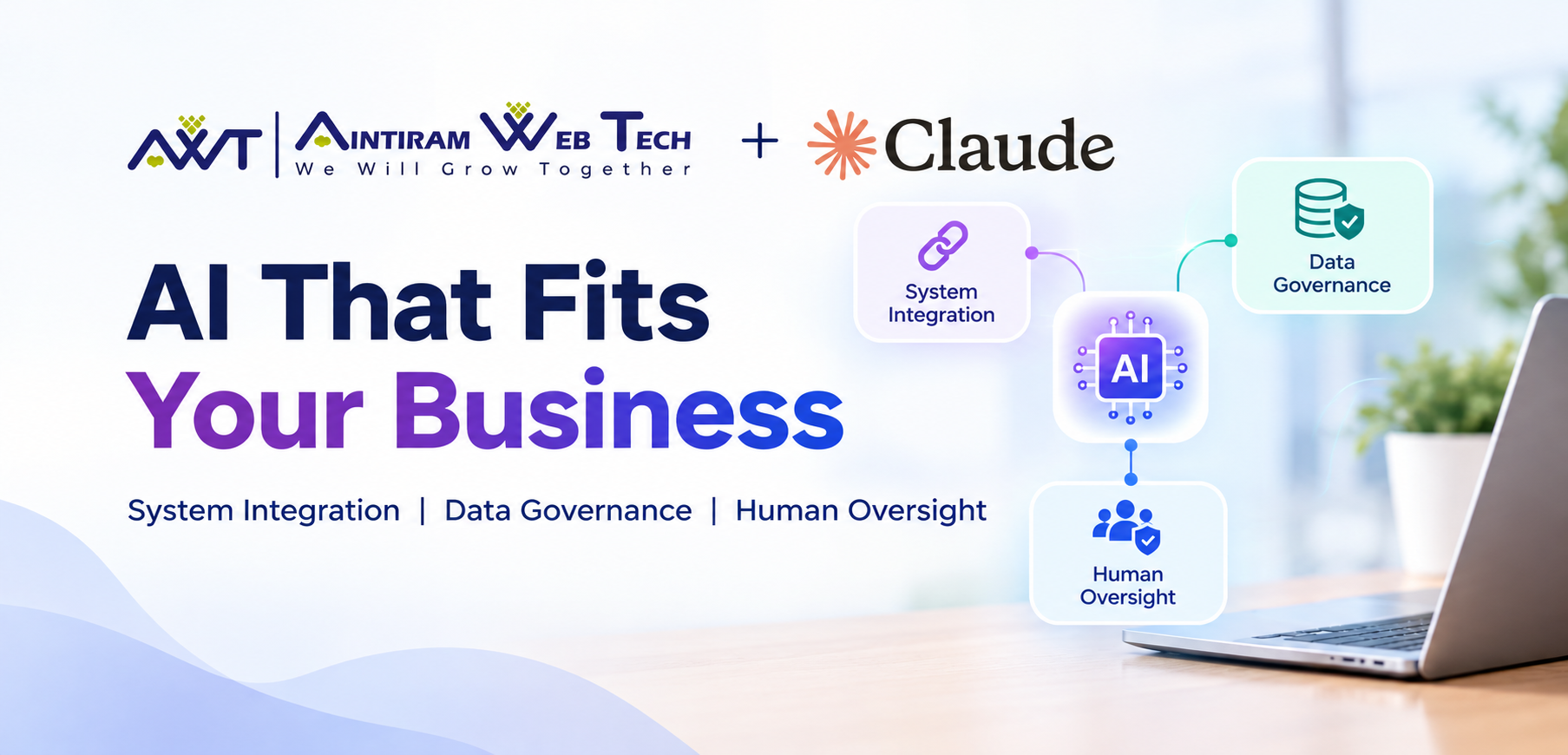
We think about three things early:
Access: What information does the AI need, and who should be allowed to see what it produces?
Placement: Where in the workflow does it help most, and where would it get in the way?
Control: What limits, logging, and review steps keep sensitive data protected?
For teams on Salesforce and other enterprise platforms, getting these answers right is usually what separates a promising demo from something people use every day.
How we approach AI projects
Before any project, we ask the same few questions:
What problem are we solving? A clear goal tells us whether AI is the right tool at all.
Will it work with your existing systems? Integration decides whether a good idea is a practical one.
How will your data be handled? Access controls and governance come first, not last.
How will we measure success? If we can’t define it, we can’t prove it.
Where does a human need to review the output? Anything affecting customers or business decisions should have a person in the loop.
Then we work in small steps. We start by understanding how your team works today. We pick one focused use case, test it with real information, and review the results together before deciding whether to expand. That keeps risk low and makes it easy to see what’s working.
Sometimes the answer is a small automation. Sometimes it’s not using AI at all. We’ll tell you which.
What’s next
Enterprise AI is moving from experiments to everyday tools, and we’d like to help our clients make that move thoughtfully. Becoming a Claude Partner is one step in that direction, and we expect to keep learning alongside the businesses we work with.
If you’re wondering where AI could fit in your Salesforce environment or your wider business, we’d be glad to talk it through.
