
 Book Free Consultation

From CRM to HRM: Transforming Recruitment With Salesforce
Discover how Salesforce transforms recruitment from manual hiring to a streamlined, automated, and data-driven HRM ecosystem.
By Srinidhi Boominathan
Recruitment Specialist
From CRM to HRM: Transforming Recruitment With Salesforce
For years, Salesforce has been recognized as the world no. 1 CRM platform, a system built to manage customers, pipelines, sales operations, and business growth. But the real magic of Salesforce lies not just in managing customers, but in managing any process that involves people, data, workflows, and decisions.
And recruitment fits perfectly into this framework.
Today, recruitment is no longer a simple function of collecting resumes and scheduling interviews. It has evolved into a strategic, technology-driven, candidate-first discipline. Organizations spend enormous effort in finding not just qualified candidates, but the right candidates who fit their culture, performance expectations, and long-term vision.
And this is exactly where Salesforce transforms from a CRM to a powerful HRM engine, reshaping how hiring teams attract, assess, and hire talent.
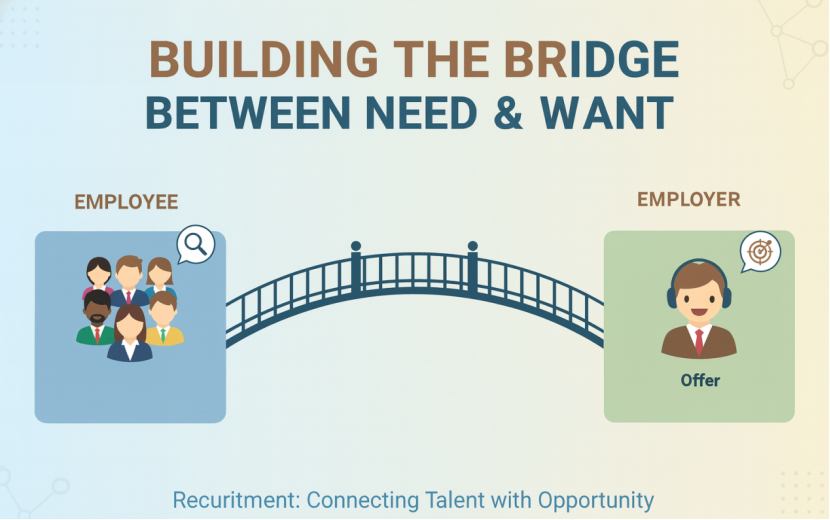
Recruitment is one of the most crucial functions of HR it builds the bridge between the people who need opportunities and the organizations that need the right talent.
To put it simply, recruitment connects the need and the want between the job seeker and the hiring manager.
The Recruitment Process: A Quick Overview
Recruitment is far more than just hiring, it’s a structured journey that connects organizational needs with the right talent at the right moment. In today’s fast-paced business environment, companies can no longer rely on scattered processes, manual tracking, or outdated methods to identify and onboard the ideal candidates. A well-designed recruitment workflow ensures clarity, reduces delays, enhances collaboration between hiring teams, and ultimately improves the quality of hires.
Whether an organization is scaling rapidly or simply refining its workforce, every stage of the recruitment cycle plays a critical role in ensuring that positions are filled strategically, efficiently, and with candidates who truly fit the company’s goals and culture.
Every company may have its own version of the recruitment flow, but in general, it includes steps like:
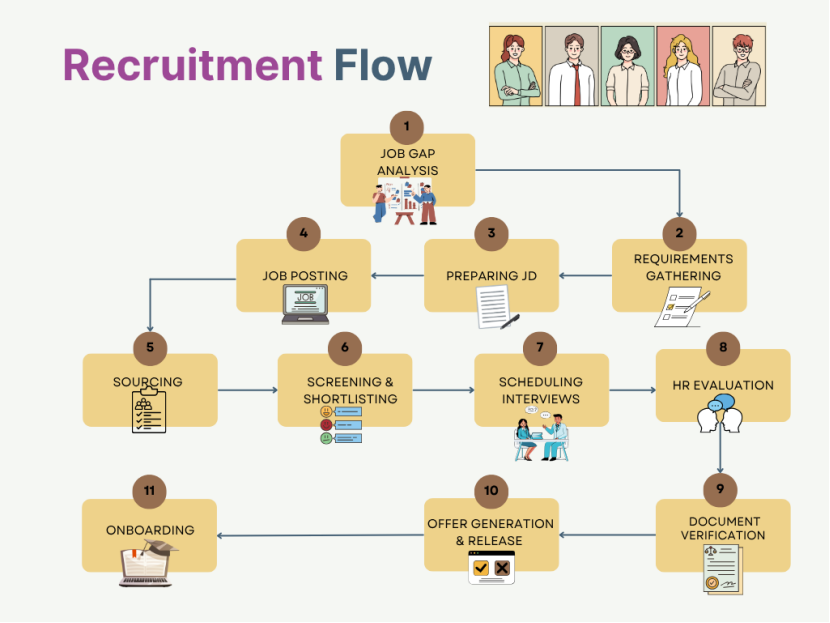
To manage all these steps efficiently, we need a streamlined process that ensures the right candidate is placed in the right position at the right time.
And this is where Salesforce comes in.
Why Salesforce for Recruitment?
Salesforce isn’t just for customer relationships , it’s a platform built for process automation, data tracking, and workflow management and With automation capabilities that streamline complex recruitment workflows into efficient processes, seamless native interactions, and advanced configuration options with ‘clicks, not code’, Salesforce customization options enable businesses to quickly adapt to shifting business requirements.
Salesforce is considered the future of recruitment because, as the world’s #1 CRM, it enables recruitment firms to operate seamlessly from a single interface, integrating the most advanced applications tailored exactly to your business operations.
When applied to recruitment, it becomes a centralized ecosystem that connects every stage of hiring , from job posting to onboarding.
Using Salesforce for recruitment enables:
Real-time collaboration between hiring managers and recruiters
Clear visibility of candidate pipelines
Automated workflows and status tracking
Secure and structured data management
Analytics and reporting for hiring efficiency
Recruitment Flow in Salesforce
Here’s how the recruitment journey can be mapped within Salesforce:
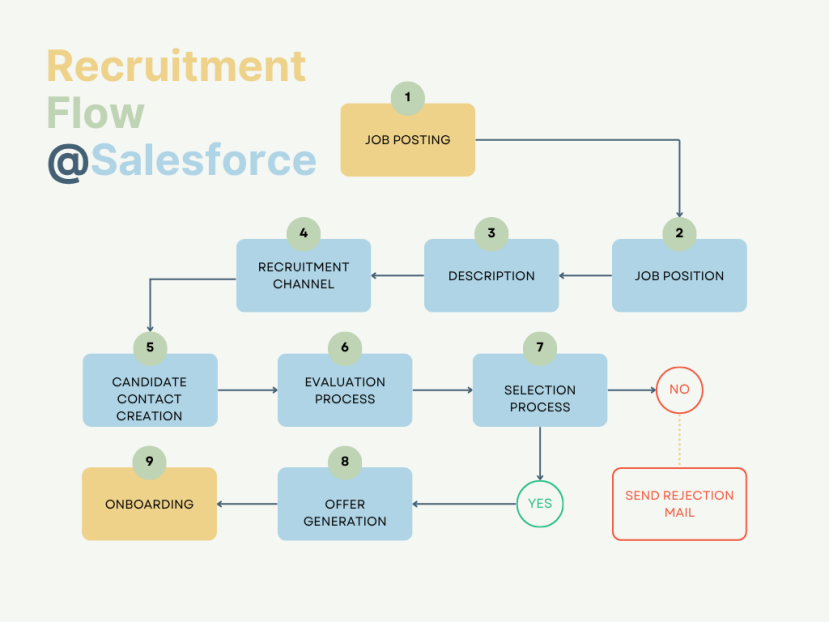
Job Posting – Create and publish job openings with key details and descriptions.
Candidate Contact Creation – Build and manage a database of applicants and their profiles.
Evaluation Process – The system tracks feedback from every interview stage. When an interviewer marks a candidate as “Recommended for Next Round,” the system automatically moves them forward and schedules the next step.
Selection Process – Move shortlisted candidates seamlessly to the selection phase.
Offer Generation – Automate offer letter creation and approval workflows.
Onboarding – Transition selected candidates smoothly into the onboarding process.
Each step can be customized using fields, triggers, and approval hierarchies based on your company’s structure. Access levels can also be defined by role to ensure data security and proper authorization.
The Result: A Streamlined Recruitment Ecosystem
By implementing recruitment on Salesforce, organizations can achieve:
Faster hiring cycles
Centralized candidate data
Transparent process tracking
Improved collaboration between HR and hiring teams
Better reporting and insights
In short, Salesforce brings structure, speed, and strategy into the recruitment process , making it more efficient and data-driven.
Before You Go…
Recruitment isn’t just about filling positions but it’s about finding potential, matching purpose, and shaping the future workforce. With Salesforce, HR teams can build a recruitment ecosystem that’s not just functional, but future-ready.
