
 Book Free Consultation

Introduction to Revenue Cloud: A Beginner's Overview
Revenue Cloud is a cloud-based solution that helps businesses manage pricing, sales, billing, and revenue in one place.
By Abirami Rajendran
Senior Salesforce Developer
Introduction to Revenue Cloud: A Beginner's Overview
In today's competitive and digital-focused business world, companies need to manage complex sales processes, changing prices, customer subscriptions, and recurring billing quickly and accurately. Many traditional systems are not designed to handle these modern revenue needs. Revenue Cloud was created to solve this problem by offering a single, cloud-based solution to manage the entire revenue process.
Revenue Cloud helps businesses manage how revenue is created, billed, and recorded. It ensures that sales, finance, and operations team work with the same information. By automating key tasks and using smart tools, Revenue Cloud helps companies grow faster and work more efficiently.
What Is Revenue Cloud?
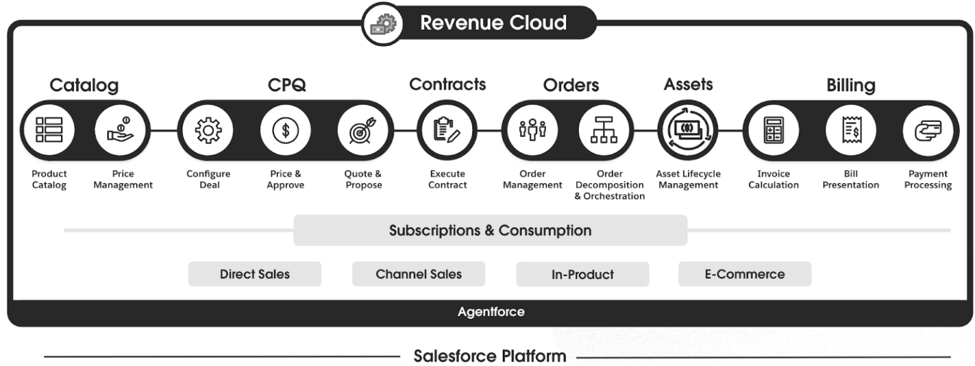
Revenue Cloud is a complete solution for managing revenue from start to finish. It connects important processes such as product setup, pricing, quoting, contracts, billing, and revenue recognition on one platform.
Instead of using many separate systems, businesses can manage all revenue-related activities in one place. This reduces manual work, lowers the chance of errors, and gives teams better visibility across departments.
Key Business Problems Revenue Cloud Solves
Many organizations face common problems when managing revenue, including:
- Manual and error-prone quote creation
- Inconsistent pricing and discounts
- Delays in approvals and contract completion
- Billing errors and revenue loss
- Limited visibility into revenue performance
Revenue Cloud solves these problems by standardizing processes and automating workflows. This allows teams to spend less time fixing issues and more time selling products and serving customers.
Core Components of Revenue Cloud
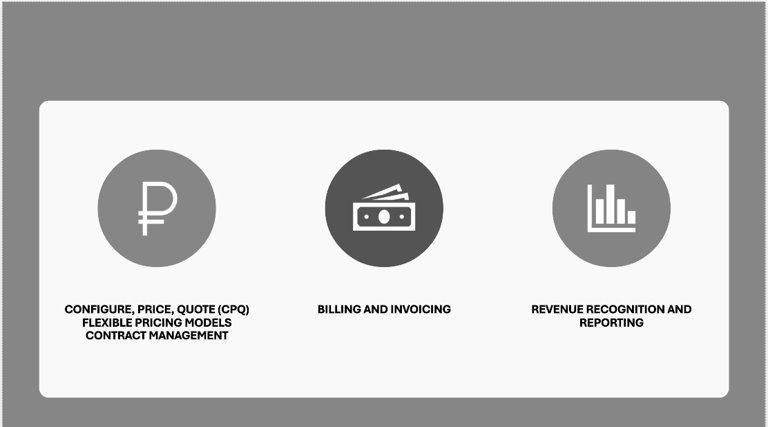
1. Configure, Price, Quote (CPQ)
CPQ helps sales teams to:
- Set up products and service bundles correctly
- Apply approved pricing rules and discounts
- Create accurate quotes quickly
This reduces the time needed to close deals and ensures customers receive correct and consistent pricing.
2. Flexible Pricing Models
Revenue Cloud supports different pricing options, such as:
- One-time pricing
- Subscription-based pricing
- Usage-based pricing
- Tiered and volume-based pricing
This flexibility helps businesses adjust pricing as their products and services change over time.
3. Contract Management
Revenue Cloud simplifies contract management by:
- Creating contracts automatically from approved quotes
- Monitoring contract terms and renewal dates
- Handling contract changes and upgrades
This improves compliance and helps build long-term customer relationships.
4. Billing and Invoicing
With automated billing, Revenue Cloud supports:
- Recurring and milestone-based billing
- Subscription renewals
- Accurate invoice creation
Automation reduces billing mistakes and improves cash flow.
5. Revenue Recognition and Reporting
Revenue Cloud helps businesses recognize revenue correctly and follow accounting rules. It also provides real-time insights into revenue performance, trends, and forecasts, helping teams make better business decisions.
Benefits of Revenue Cloud
Businesses that use Revenue Cloud gain several key benefits:
- Sales processes become faster and more accurate
- Sales, finance, and operations teams work better together
- Less revenue is lost due to errors or manual work
- Customers get clear pricing and correct bills, improving their experience
- The system can easily support business growth and new pricing models
Why Revenue Cloud Is Important
Today's businesses often handle:
- Subscription-based products
- Recurring revenue
- Complex pricing rules
- Frequent contract updates
- Operations across multiple countries
Revenue Cloud is important because it:
- Reduces manual work and human errors
- Keeps pricing and billing consistent
- Helps prevent revenue loss
- Improves teamwork between sales, finance, and operations
- Builds customer trust through accurate and transparent pricing and billing
Who Should Use Revenue Cloud?
Revenue Cloud is a good fit for organizations that:
- Offer subscriptions or recurring services
- Sell complex products or bundled solutions
- Operate in different regions with different pricing models
- Want to modernize and automate their revenue processes
Industries that commonly use Revenue Cloud include technology, manufacturing, healthcare, telecommunications, and professional services.
Real-World Example of Revenue Cloud
E-Commerce Business Running Promotions
An online retailer offers seasonal discounts and special pricing for loyal customers.

How Revenue Cloud Helps:
- Discounts are applied automatically based on predefined rules
- Customer-specific pricing is managed and approved correctly
- Sales and finance teams see the same pricing information
Result: Faster checkout, fewer pricing issues, and increased customer trust.
Conclusion
Revenue Cloud provides a strong base for managing revenue in a modern business by bringing sales, pricing, contracts, and billing together on one platform. For beginners, learning about Revenue Cloud is an important first step toward creating efficient, scalable, and customer-focused revenue processes. As businesses grow and change, Revenue Cloud helps them manage revenue more accurately and predict future growth with confidence.
